
Showing posts with label India-International Relations. Show all posts
Dec 26, 2015
PM Narendra Modi inaugurates new building of Afghanistan Parliament in Kabul

The Prime Minister inaugurated the new building of Afghanistan Parliament in the capital city Kabul built by India.
It was inaugurated during Narendra Modi’s first official visit to Afghanistan after becoming Prime Minister. He also named one block of Parliament as Atal Block after former Prime Minister Atal Bihari Vajpayee.
Prime Minister also handed over 4 Mi-25 attack helicopters to Afghanistan Air Force symbolising a shift in India’s position on supplying ‘offensive’ equipment.
Afghanistan parliament building was constructed by India at a cost of US 90 million dollars as a symbol of India’s support to Afghanistan’s democracy and civil reconstruction.
The construction of Parliament building was started in 2009 and it had missed its completion deadlines at least 3 times since 2011. This project along with $300 million Salma dam project (called the India-Afghanistan friendship dam) in Heart province has generated much goodwill for India.
Nov 16, 2015
India, Australia seal N-deal procedures
 India and Australia have sealed Nuclear-deal procedures for supply of uranium from later to energy starved India.
N-deal procedures were formally completed between both countries following a bilateral meeting between Prime Minister Narendra Modi and his counterpart Malcolm Turnbull in Antalya, Turkey on the sideliners of the G-20 Summit.
Following the conclusion of the agreement, India has become the first country to buy Uranium from Australia without being a signatory to the Nuclear Non-proliferation Treaty (NPT).
Points to note
- India and Australia had started talks on the Civil Nuclear Cooperation Agreement in 2012 after Australia had lifted the long-standing ban on selling uranium to energy-starved India.
- The cooperation agreement was signed between two countries in September 2014 to sell uranium as a nuclear fuel for peaceful power generation.
It should be noted that Australia has about a 40 percent of world’s recoverable uranium resource and annually exports around 7,000 tonnes of it.
In India, nuclear energy contributes just 3% of its electricity generation and it has currently signed nuclear energy agreements with 11 countries. Presently, India imports uranium from France, Russia and Kazakhstan to supply fuel to its two dozen small reactors at six sites with a total capacity of 4,780 MW which accounts for 2% of its total power capacity.
Oct 30, 2015
India-Africa Forum Summit adopts framework for strategic cooperation & Delhi Declaration

The Third India and Africa Forum Summit (IAFS) has adopted a Delhi Declaration 2015 and India-Africa Framework for Strategic Cooperation.
These agreements were adopted at the conclusion of third Summit which was attended by India and all 54 African countries in New Delhi.
Delhi Declaration-2015
- Calls for continued collaboration in the fields of peace and security between India and Africa.
- Provide a concrete foundation for the consolidation of our strategic partnership between both sides.
- Enhance cooperation for strengthening of UN counter terrorism mechanism.
- Enhance cooperation and coordination to combat terrorism in all its forms and manifestations.
India Africa Framework for Strategic Cooperation
- Reaffirmed strong commitment to work together for comprehensive reforms of the United Nations system, including its UN Security Council.
- Make these world governing institutions more regionally representative, democratic, accountable and effective.
- Agreed to establish Small and Medium Enterprises and Medium and Small Industries to promote income generation and employment creation for people of both sides.
- Ensure access to affordable and quality treatment and medicines, particularly generic medicines to people of both sides.
Third India-Africa Forum Summit (IAFS) was the largest international gathering of leaders in New Delhi after the 1983 Non-Aligned Movement (NAM) summit. It was also one of the largest gatherings of African countries outside Africa as all 54 nations of the continent had participated.
Oct 29, 2015
Nepal inks MoU with China to ease fuel crisis
 Nepal has signed a Memorandum of Understanding (MoU) with China in order to import all kinds of fuel in order to ease fuel crisis in the country.
It was signed by Nepal Oil Corp (NOC) and China National United Oil Corporation (PetroChina) in Beijing to supply all kind of the petroleum products for Nepal needs.
This is the first time that China is commercially supplying petroleum to Nepal and already had agreed to donate 1.3 million litres of petrol to landlocked Himalayan country.
End of India’s Monopoly
- With this Nepal may end a long-held monopoly of buying fuel from the Indian Oil Corp (IOC) as it had traditionally relied on its southern border crossings with India for trade.
- Annually, Nepal used to buy around 1.3 billion dollars of gasoline from IOC.
- Nepal had completely relied on India for its trade including fuel from southern border due to favourable geographic conditions which eased the transportation links with India compared to the mountainous terrain of the northern routes bordering China.
Economic blockade
- Presently, Nepal is facing continued protests and economic blockade at key border trade points with India over the adaptation of new Republic Constitution.
- The agitating protest led by Madhesi Front is claiming that the Constitution does not guarantee enough rights and representation to the Madhesi and Tharu communities residing in Terai region of southern Nepal.
- The blockade has hit Nepal’s economy hard and hampered the supply of essential goods, including petroleum products and medicines in Nepal.
Oct 27, 2015
Third India-Africa forum summit begins in New Delhi
The third India-Africa forum summit (IAFS) began in New Delhi on 26 October 2015.
The four day summit (from 26 October to 30 October 2015) is one of the largest gatherings of African countries outside Africa as all 54 nations of the continent have participated.
Key facts
- It will address the key challenges faced by African nations which include food, health and environmental security etc.
- Provides India an opportunity to forge a constructive and deeper alliance with the resource-rich continent.
- India hopes to create favourable conditions through this summit to stimulate trade and investment flows between India and African countries.
- Both sides are expecting to reinforce their partnership on the global platform and deepen security cooperation including on countering terrorism and maritime security.
- The summit is considered as Prime Minister Narendra Modi led NDA Government’s biggest diplomatic outreach involving delegates from all African nations.
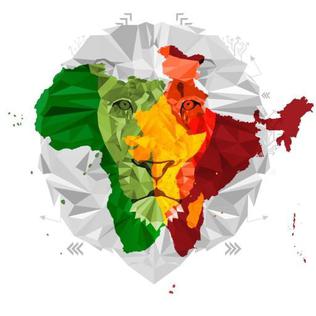
Logo of Third IAFS
- It depicts a Lion with one half of an Indian lion and another half of African lion.
- In the background of logo, an African map is overlapped with Indian map as a reference to ancient Gondwanaland depicting Indian subcontinent was part of today’s Africa’s continental landmass.
- Officially the logo means “Proud, Courageous, Bold and on the Prowl, ready to take on the future and seize every opportunity“.
About India–Africa Forum Summit
- IAFS is an official platform for the African-Indian relations. It is held every 3 years and the venue is selected on rotational basis from both sides.
- Agenda of the summit: It covers various fields including agricultural sector, trade, industry and investment, peace and security, promotion of good governance and civil society, information and communication technology (ICT) etc.
- First Summit: It was held in 2008 in New Delhi and was represented by 14 countries of Africa chosen by the African Union.
- Second Summit: It was held at Addis Ababa, Ethiopia and 15 African countries had participated in it.
- Third Summit: Present summit was earlier scheduled in December 2014 in New Delhi, but it was postponed to October 2015 due to deadly Ebola outbreak in few western African countries.
Oct 12, 2015
India and Jordan ink 6 MoUs to cooperate in various fields
 India and Jordan have signed six Memoranda of Understanding (MoU) in various fields.
These MoUs were signed in presence of Jordanian Prime Minister Abdullah Ensour and Indian President Pranab Mukherjee in Amman.
Jordan was first leg of President Pranab Mukherjee’s official three Middle East nations tour to Jordan, Palestine and Israel.
The agreements signed are
- MoU on executive programme for cultural exchange between the Jordanian and Indian governments.
Oct 10, 2015
India, Ecuador ink Protocol to establish Ecuador Joint Economic and Trade Committee
 India and Ecuador has signed a Protocol for the establishment of the India-Ecuador Joint Economic and Trade Committee (JETCO) to enhance bilateral trade and investment relations.
It was signed by Mentor Villagomez, Ecuadorian Ambassador to India and Rita Teotia, Commerce Secretary during the meeting between delegations of both countries.
India-Ecuador Joint Economic and Trade Committee (JETCO)
- JETCO aims to further improve, deepen and strengthen the existing trade relationship between India and Ecuador.
Oct 4, 2015
Nepal turns to UN over ‘obstruction’ of trade point with India
 Nepal has turned to the United Nations over alleged obstruction of a key border trade point with India which has resulted in acute shortage of essential goods.
Nepal’s position
- Claims to be suffering from scarcity of essential goods like fuel and cooking gas due to “undeclared blockade” of a key trade point at the border with India.
- Appealed to the international community to ensure effective and unhindered freedom of transit of land-locked countries is not curtailed.
- Issue of India’s blockade is affecting implementation of the Vienna Programme of Action from year 2014 to 2024 of developing countries (LLDCs) like Nepal.
Subscribe to:
Posts
(
Atom
)